Hello World is the free computing and digital making magazine and podcast for educators. Every new issue is packed with essential resources on computing and digital making, including practical examples and advice, in-depth discussions, news, lesson plans, project ideas, and expert reviews.
Subscribe now to receive the latest magazine and podcast episodes as soon as they are released — free, practical, and full of ideas you can use right away in your classroom.
100% Free Forever
No spam or paywalls
Instant PDF download
Each quarterly issue delivers high-impact, classroom-tested curriculum materials, pedagogy research, and inventive making guides written by fellow educators.
Issue 24
Artificial IntelligenceEthicsSecondary
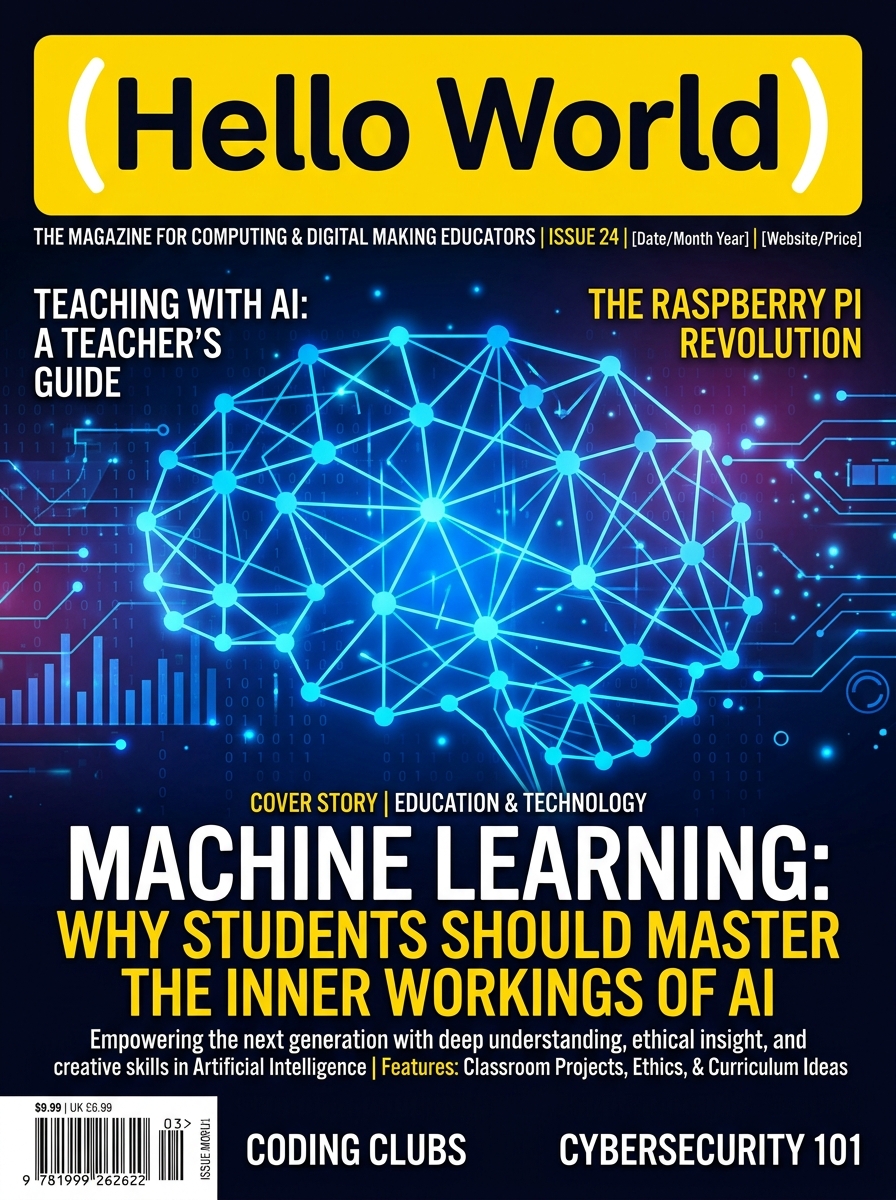
Machine Learning: Why Students Should Master AI
Empowering the next generation with algorithmic understanding, ethical considerations, and hands-on Python & Scratch AI models for middle and high school learners.
Issue 23
Primary Educationmicro:bitCreative Play
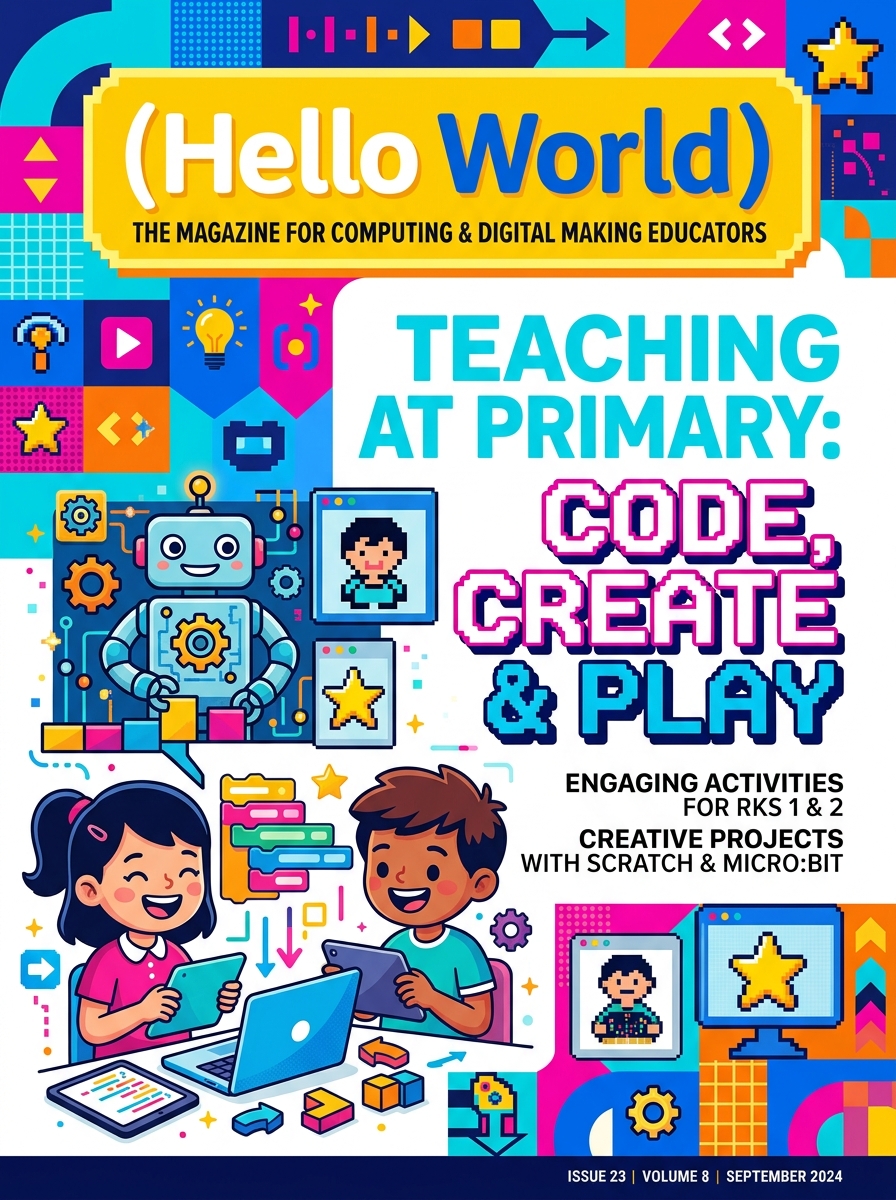
Teaching at Primary: Code, Create & Play
Fun unplugged computational thinking exercises, physical robot crafts, and introductory block programming designed for kindergarten through 5th-grade teachers.
Issue 25 • Latest
Green ComputingIoT EcologyMakerspaces
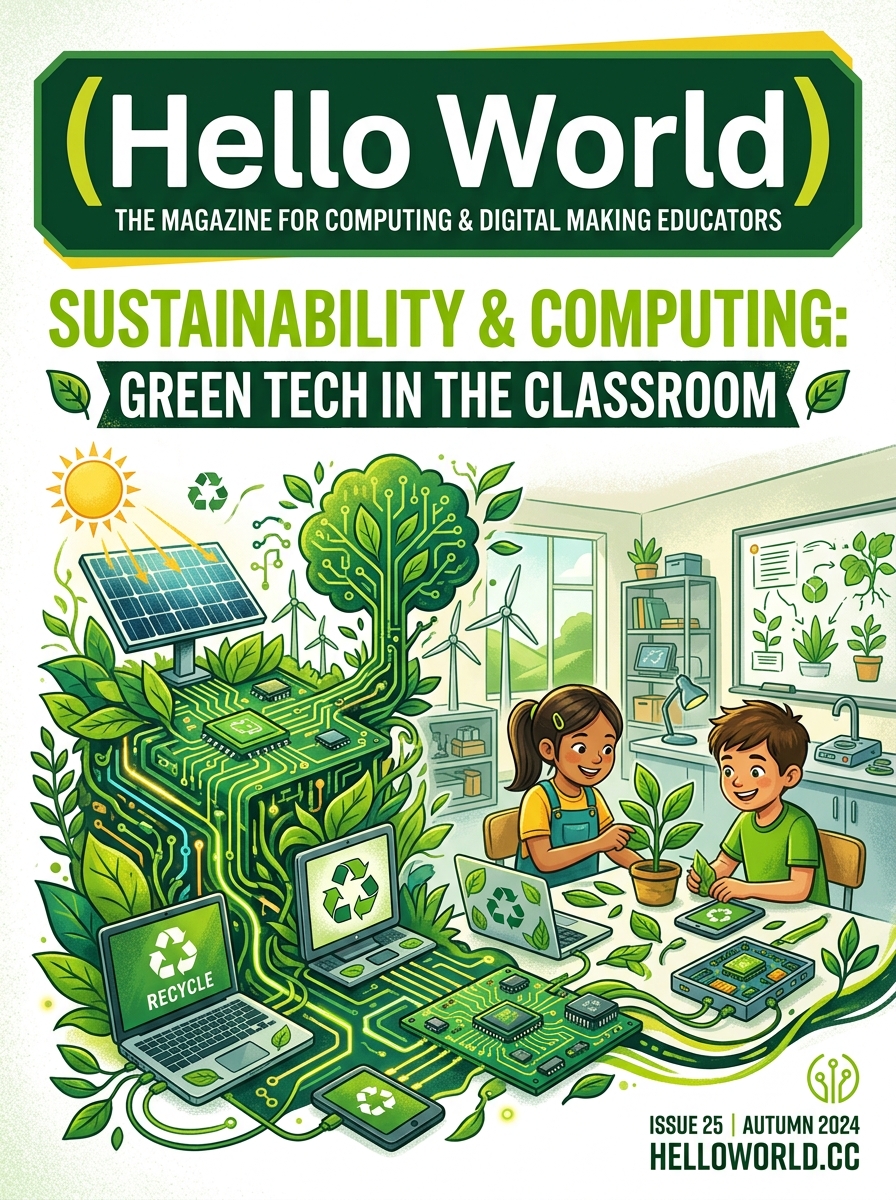
Sustainability & Computing: Green Tech in the Classroom
How educators can blend eco-conscious hardware practices, e-waste recycling labs, and solar-powered microcomputer sensors into existing STEM syllabi.
Tune In & Learn
The Hello World Podcast
Hosted by experienced educators and tech pioneers, each episode explores current trends, pedagogical research, and real classroom breakthroughs with guest teachers from around the globe.
Bi-weekly episodes with teacher interviews & curriculum leaders
Actionable teaching ideas you can try next Monday morning
Available on all major podcast directories with transcripts
Demystifying AI in the Classroom: Practical Pedagogy
With hosts Sway Grantham & James Robinson featuring Dr. Ken Kahn
12:1532:48
Content Blueprint
What’s Inside Every Issue?
Created by educators for educators, each issue is designed to bridge cutting-edge computer science concepts with accessible pedagogy.
Tested Lesson Plans & Starter Projects
Fully modular curricula with teacher notes, downloadable worksheets, Scratch starter code, and Python projects aligned with global K-12 computing guidelines. Zero prep friction so you can inspire students immediately.
Digital Making & Robotics
Hands-on electronics with Raspberry Pi, BBC micro:bit, Arduino, and maker sensors that demystify hardware and physical computing.
Evidence-Based Pedagogy
Academic research condensed into practical classroom takeaways: cognitive load theory, PRIMM methodologies, and culturally responsive teaching.
Global Teacher Voices
Real stories from practicing educators across 80+ countries sharing their best classroom hacks, inclusion strategies, and coding club successes.
Unbiased Hardware Reviews
Independent reviews of educational tech, robotics kits, and computer science textbooks so schools invest their budgets wisely.
Educator Praise
Loved by Teachers Globally
Discover why over 100,000 educators depend on Hello World as their primary companion for modern computing education.
★★★★★
"Hello World has completely reshaped our school's computing curriculum. The lesson plans on ethics in AI sparked the most engaged debates our students have ever had."
SC
Sarah Jenkins
Head of Computing, Manchester UK
★★★★★
"Finding high quality, free, research-backed materials for primary coding used to take me hours on weekends. Hello World delivers exactly what I need directly to my inbox."
MD
Marcus Davies
Primary STEM Specialist, Toronto Canada
★★★★★
"The physical computing articles inspired us to launch a weekend robotics club. The students built environmental sensor stations using the blueprints from Issue 25!"
AL
Aisha Lin
High School CS Teacher, Singapore
Never Miss an Issue. Always 100% Free.
Join 100,000+ educators advancing computing education. Subscribe today to receive digital PDF editions worldwide, or free print copies delivered to eligible UK schools.
🔒 We respect your privacy. No spam, ever. Unsubscribe anytime with 1-click.
Common Inquiries
Frequently Asked Questions
Everything you need to know about Hello World magazine, subscriptions, and classroom usage.
Yes, 100% free! Every digital issue (PDF) and all podcast episodes are released completely free of charge under open-access principles for educators around the globe. There are no paywalls or hidden fees.
Absolutely! Hello World is published under a Creative Commons license (CC BY-NC-SA), meaning you are free to reproduce, modify, and distribute all classroom resources and worksheets for non-commercial educational purposes.
If you teach in a recognized school or educational institution within the United Kingdom, you can subscribe with your school address to receive complimentary physical copies delivered directly to your staff room or library.
Yes! We actively encourage teachers, makers, and computing education researchers to share their classroom experiments and lesson ideas. You can submit proposals through the educator contribution portal.
Yes, our complete archive of over 40+ historical editions is accessible online as high-resolution searchable PDFs.
Issue 24 • Featured Edition
Machine Learning: Why Students Should Master AI
A deep-dive exploration of modern artificial intelligence for secondary and high-school classrooms.
Featured In This Issue:
Cover Story: Neural networks without fear: practical classroom exercises
Lesson Plan: Building a gesture-recognition model in Scratch
Ethics in CS: How to teach algorithmic bias and transparency